
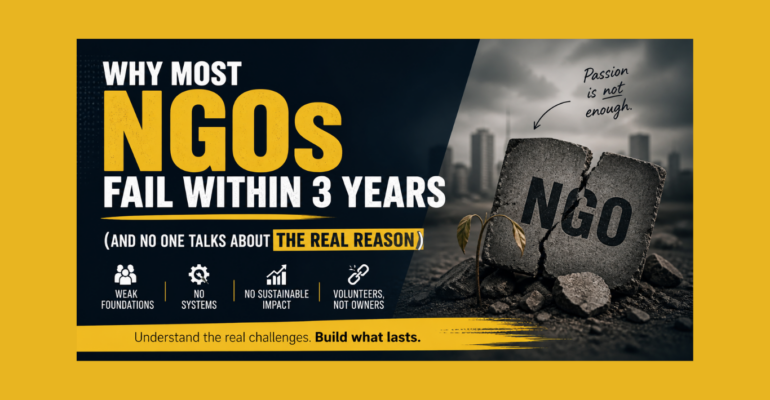
Why Most NGOs Fail Within 3 Years (And No One Talks About the Real Reason)
Why Most NGOs Fail Within 3 Years (And No One Talks About the Real Reason)
 adeeljaved
 Most NGOs don’t fail because they lack passion. They fail because they rely on it.
And passion, without systems, burns out faster than people expect.
There is energy. There is intention. There is a genuine desire to create impact. People come together believing they can change lives.
But within 2–3 years, most of these organizations quietly disappear. Not because people stopped caring—
but because they never built what was required to sustain impact.
Good Intentions, Weak Foundations
Most NGOs begin with one or two individuals. They are driven, motivated, and ready to contribute. Very early on, they assign themselves titles—Founder, CEO, President. It creates the appearance of structure.
But in reality, there is no team. No system. No clarity of direction.
Just intention.
And intention alone cannot sustain an organization.
The Team That Never Gets Built
One of the biggest reasons NGOs fail early is simple:
they don’t build teams.
They gather people. They add volunteers. They create groups.
But they don’t build ownership. And without ownership:
- People don’t stay
- People don’t grow
- People don’t take responsibility
Eventually, everything depends on one person. And no organization survives on one person for long.
A Turning Point We Couldn’t Ignore
In the early years of Pakistan Citizens Alliance, this pattern repeated itself again and again.
Volunteers would come. Activities would happen. Everything looked active from the outside. Then suddenly—people disappeared. No conflict. No closure. Just silence.
Each time, we were left with the same reality: starting again from zero.
At one point, we had to confront an uncomfortable truth:
This is not a people problem. This is a system problem.
That realization changed everything. We paused. We reflected. And we made a decision— if we wanted to continue, we could not operate like this anymore.
We needed:
- A team, not just volunteers
- Structure, not just activity
- Systems, not just effort
And most importantly, we needed commitment at the core. We asked ourselves a difficult question:
If this truly matters—who is willing to commit to it?
That’s when the shift happened. Instead of depending on uncertain involvement, we made a conscious decision that at least one or two people must dedicate themselves fully. At that point, it came down to me and Asad.

We stepped forward—not just to run activities, but to build something that could last. That decision was not easy.
But it was necessary. Because that’s when PCA stopped being just an effort— and started becoming a system.
The Title Problem No One Admits
There is another reality—especially today. Many people want to be associated with something meaningful.
But they also want recognition. They want their name attached to a position. So instead of strengthening existing efforts, they start something new— not always for impact, but for identity.

But titles don’t build organizations.
They often become the first barrier. Because once ego enters, collaboration leaves.
Activity Feels Like Impact (But It Isn’t)
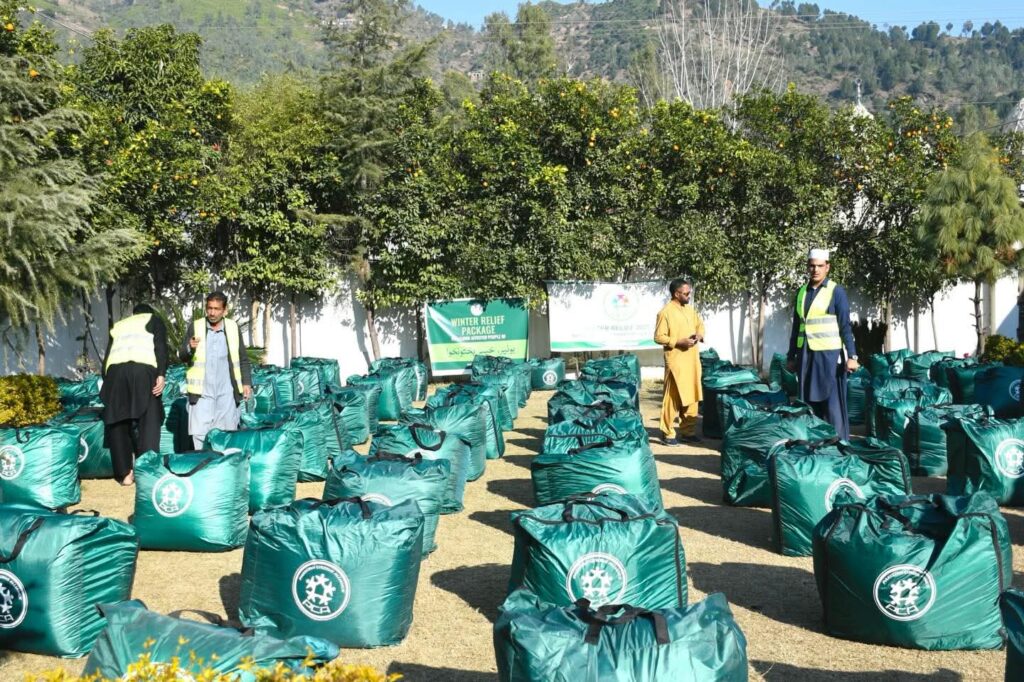
This is where many NGOs misunderstand their work. They organize:
- Awareness walks
- Sessions in institutions
- Small campaigns
And it feels like impact. But the real question is:
- What changed after all this?
- Did anything improve long-term?
- Did any problem reduce?
- Did any system get built?
In most cases, the answer is no. This is not impact. This is short-term activism. And activism without structure does not last.
No Real Understanding of the Problem
Another critical gap is clarity. Many NGOs begin working without deeply understanding the problem they want to solve.
They don’t study it.
They don’t analyze it.
They don’t explore root causes.
So their efforts remain scattered. And scattered efforts rarely lead to meaningful outcomes.
When Pressure Replaces Passion
Everything feels manageable—until real life intervenes.
And it always does.
- Financial responsibilities
- Family expectations
- Career pressure
- Social realities
This becomes even harder when founders are young.
Because the question shifts from:
“What do you want to do?”
to:
“How will you sustain this?”
Without systems, income pathways, or structure—there is no answer. So people step back. Slowly. Quietly. Completely.
The Real Reason: No Systems
At the core of it all, one issue remains:
There are no systems.
No system for:
- Building teams
- Retaining volunteers
- Generating funds
- Delivering consistent impact
So every effort starts from zero. And over time, that becomes exhausting.
What Actually Works
If an NGO wants to survive beyond the first few years, it must make an early shift:
- Build teams, not titles
- Focus on ownership, not positions
- Prioritize depth over activity
- Understand the problem before acting
- Build trust before asking for funding
- Create systems early
Even small systems create long-term stability.
The Hard Truth
Starting an NGO is easy. Sustaining it is not. And the difference is not passion or intention.
It is the ability to:
- Stay consistent
- Build structure
- Handle pressure
- Think long-term
Closing Thought
If you are running—or planning to start—an NGO, ask yourself honestly:
Are we building something real?
Or are we just creating activity that makes us feel productive?
Because in the long run:
Feelings fade.
Titles fade.
Activity fades.
Only impact remains.
Call to Action
If you’re building an NGO, don’t just start with passion—start with structure.
And if you want to learn how sustainable systems are built in real-world organizations like PCA, stay connected or reach out to collaborate.
Written by Muhammad Adeel Javed
Building systems for sustainable impact through Pakistan Citizens Alliance.
